How I Quit Smoking in Ten Days, Without Willpower
I smoked for sixteen years. I enjoyed it. I had no real intention of stopping.
Then I sat a ten-day Vipassana meditation retreat. On the morning I arrived, I smoked my last twenty pack. When I left ten days later, I couldn't stand the smell. I have never thought about smoking again.
No patches. No willpower. No white-knuckling through cravings. The addiction was simply gone.
For years I didn't fully understand what had happened. I just knew that something had changed at a level deeper than decision-making. It took developing my bodywork practice to find the language for it.
What actually happened
Vipassana is a Buddhist insight meditation practice. You sit in silence for ten days, with no reading, no writing, no phone, no eye contact. The technique is deceptively simple: you observe the physical sensations in your body, without reacting to them.
That last part is the key. Without reacting.
Every craving has a physical signature. Addiction is not just a thought pattern or a habit loop. It lives in the body as sensation: a tightness, a pull, an intensity that demands a response. Normally, we react to that intensity. We smoke the cigarette, eat the food, pick up the phone, pour the drink. The reaction provides temporary relief, and the cycle continues.
In Vipassana, you sit with the sensation and do nothing. You observe it. You notice where it is, what it feels like, how it changes. And it does change. Intensity rises, peaks, and passes. The sensation is not permanent. It just feels that way when you are in the habit of reacting before it has a chance to dissolve.
An important note: you begin by observing physical bodily sensations, but with continued observation these become more subtle. Physical sensation gives way to somatic sensation: sensation not easily attributable to a physical bodily counterpart. It is this subtle somatic sensation that underlies the physical sensation, and it is there that the patterns of craving and aversion lying at the root of addictive patterns are held.
Over ten days of this practice, the deep patterns of craving that had driven my smoking for sixteen years came to the surface as intense sensation, were observed without reaction, and dissolved. Not suppressed. Not managed. Dissolved. By the time I walked out, the physical foundation of the addiction was no longer there. There was nothing to resist.
What does this have to do with bodywork?
This experience shaped everything I went on to develop in my practice.
What Vipassana does from within, through the practitioner's own discipline and concentration, I do for clients from without, through conscious touch and guided awareness. The mechanism is the same: bringing awareness to intense sensation in the body, and observing without reaction, so that long-held patterns can change.
The difference is accessibility. Vipassana requires ten days of silence and considerable mental discipline. Not everyone can do that, and not everyone needs to. In a bodywork session, I guide the client into a similar state of deep somatic awareness through breathwork and slow, present touch. Their awareness moves from the thinking mind into the body. Tensions arise, are observed, and begin to soften and release. The client experiences this happening, consciously, without needing to fight or force anything.
This is what I mean by "bottom-up." We are not trying to change behaviour through understanding or willpower. We are dissolving the embodied foundation that the behaviour is built on. When the physical pattern changes, the behaviour built on top of it changes too. That is why I didn't need willpower to quit smoking. The craving wasn't resisted; it was resolved.
It's not just about addiction.
I share this story because it illustrates the principle clearly, but the same mechanism can be applied to any self-reinforcing systems; to persistent pain, to embodied trauma, to emotional holding patterns, to the tension and armouring that accumulate over a lifetime. These are all patterns of intense sensation held in the body, and tensions and tightening that form around them, and mental associations and beliefs that form in relation to them; these are interrelated and self-reinforcing patterns that persist because we have learned to react to them rather than observe them.
When you learn to be with sensation without reacting, and when you have support in doing so, the body can let go of what it has been holding. Not through force, but through presence, non-reactive observation, and letting go.
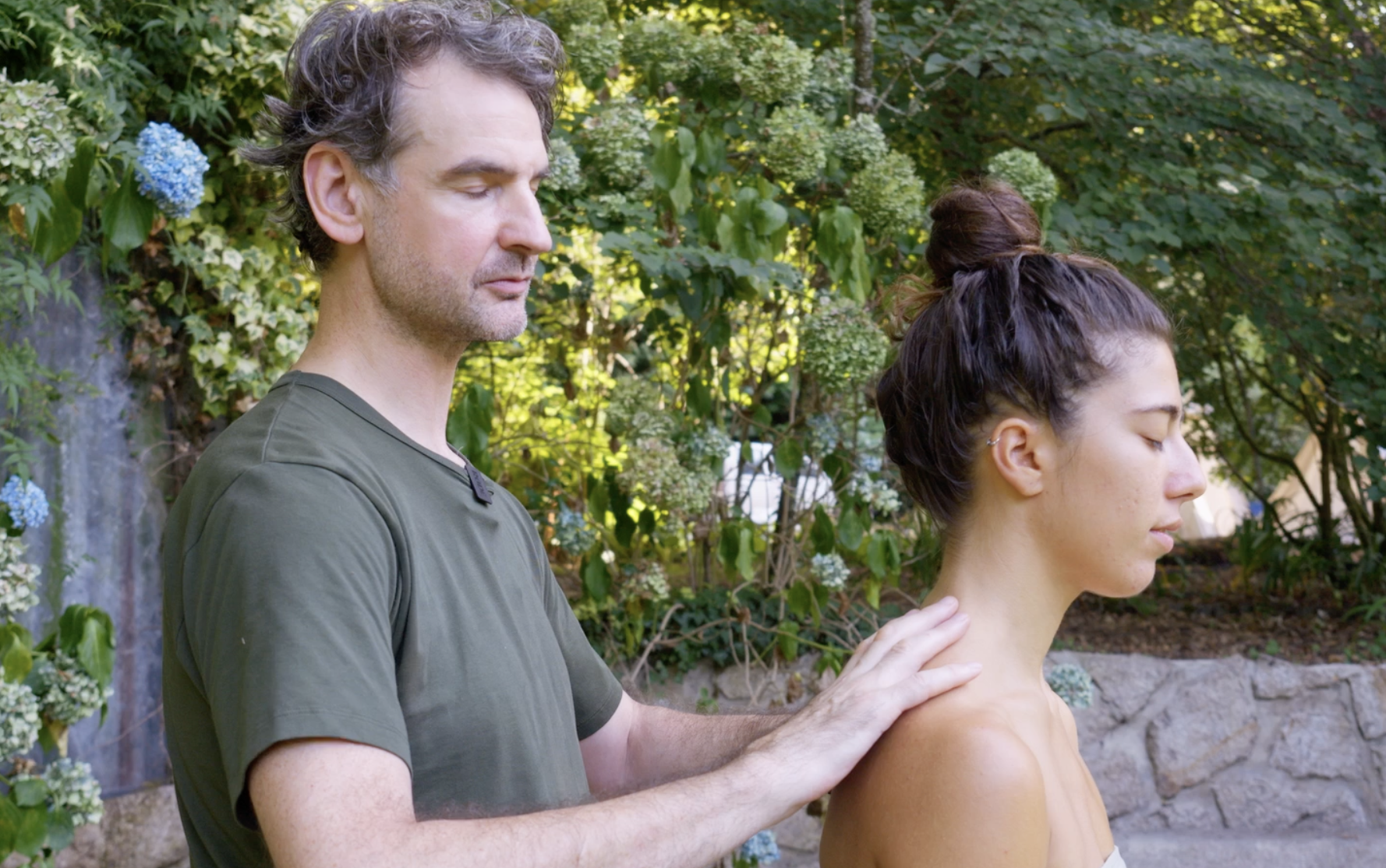
This personal story is about how observation of sensation helped me overcome addiction, but it was the principles underlying this experience which I only later understood and applied to my practice. This is my approach to approaching persistent patterns of experience in the body: tension, pain, or emotional energy, or associated thought patterns and behaviours that the client has reported. Issues that thinking or willpower alone has not been able to shift.
In my practice, I help you become aware of what is held, and observe without reaction, and observe what changes over time when you do so. It is your growing awareness and changing relationship to sensation that is doing all the work.
If you'd like to explore whether this approach might work for you, I would be happy to listen and see if I can help.
Disclaimer: This was my personal experience of Vipassana meditation and how it helped me overcome addiction. Transformational Bodywork draws on the same principles.
The purpose of the personal account is illustrative, to help you understand these principles and how working with sensation can acheive results in a way that conventional approaches cannot. I make no claims about the treatment of addiction.